






About
The Difference that Makes the Difference
Europe’s future depends on creative skills – the capacity to imagine alternatives, experiment with new solutions, and respond to uncertainty. Creative skills are increasingly recognised as essential for navigating complexity, adapting to transformation, and strengthening democratic governance through collective actions.
Such skills are developed, tested, and shared through the Cultural and Creative Sectors and Industries (CCSI). Here cultural practice, creative collaboration, and artistic experimentation shape how societies question assumptions, confront power, exercise freedom, and imagine alternative futures.

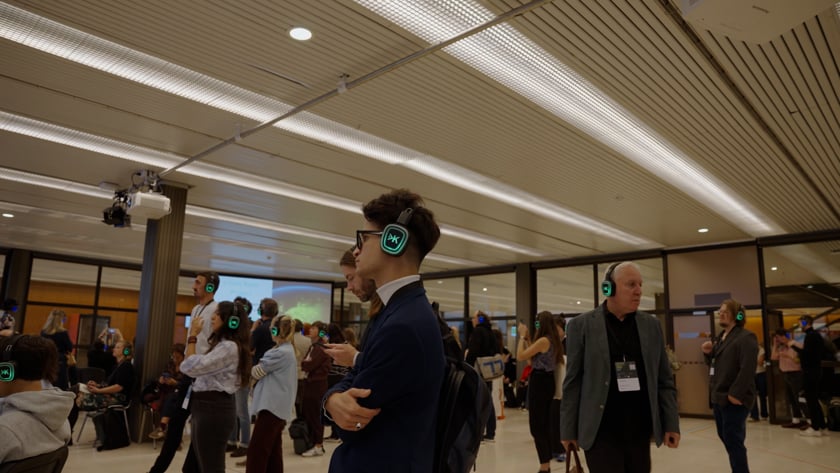
Creative Skills Week 2026 (CSW2026) is bringing together Europe’s CCSI, policymakers, educators, and industry leaders in Brussels at a time when democracy, technological sovereignty, and social cohesion are under pressure to ask: how can we harness and target the transformative power of creative skills for wider societal challenges?
At the centre of CSW2026 is the concept of creative confidence – the capacity to turn creative thinking into action, to bring together forms of expertise conventionally kept apart. This enables individuals and organisations to thrive on collaboration and inclusivity, prototype new models of thinking and action, and develop innovative approaches to familiar challenges. By embedding creative skills into professional development strategies, we can ensure that organisations have the confidence to tackle challenges, experiment, and thrive in an era of rapid change.
While these skills are deeply rooted in cultural practice, their relevance extends far beyond the CCSI. Within the sector, they already drive innovation, shape narratives, and generate new forms of collaboration across disciplines and borders.
Across the wider economy and society, they increasingly contribute to innovation and problem-solving across sectors – from education and digital governance to health systems, human resources, and data-driven organisations.
CSW2026 moves beyond internal sector dialogue to build strategic alliances across policy and practice domains. Through high-level debates, case studies, and cross-sector showcases, the event demonstrates how creative skills operate in practice and why they represent a different perspective, one that reframes challenges, connects ecosystems, and shapes Europe’s capacity to act.
This edition also marks a key milestone for the CYANOTYPES project, co-organiser of CSW2026, featuring a showcase of its pilots – real-life implementations of the CYANOTYPES Framework – alongside the project’s policy recommendations.
Creative Skills Week 2026 is co-organised by EIT Culture and Creativity, CYANOTYPES and Creative Futures Academy, in collaboration with the Creative Pact for Skills, CREDEX and the GreenCCIrcle project.
The event is kindly co-hosted by ICHEC Brussels Management School and LUCA School of Arts, and is curated by ELIA. It is also recognised as an Associated Event of the Irish Presidency of the Council of the European Union 2026.
Ways to Contribute
For this year’s edition, there will be no open call for contributions, and proposals will not be accepted. However, we warmly invite everyone to join Creative Skills Week 2026 as active participants and engage in the CYANOTYPES Pilots. These offer organisations, networks, and independent professionals the opportunity to explore how the CYANOTYPES Framework and Toolkit can be applied in real environments. This Framework supports creative organisations, educators, and networks in navigating social, digital, and ecological transitions.
As part of Creative Skills Week, CYANOTYPES invites all participants to contribute to the Skills Intelligence Survey here.
Your contribution will help CYANOTYPES validate existing findings and identify overlooked competences, training gaps, barriers to skills development, ecosystem needs and emerging priorities for future policy and practice.
View this short animated video providing a general introduction to the work of the CYANOTYPES project
Photo Gallery 2026

Watch the Aftermovie
Watch Livestreams
CSW2026 Programme
Join us from 7 – 9 September 2026 in Brussels
Across three days, the Cultural and Creative Sectors and Industries and their stakeholders are positioned as changemakers: actors capable of exercising creative agency, breaking invisible silos between disciplines, questioning assumptions, prototyping alternatives, and translating complexity into action. The programme aims to connect policy with practice, bridge European priorities with local implementation, and position culture and creativity as drivers of innovation, resilience, and transformation. Explore the programme below.

DAY 1 — Why Creative Skills Matter

DAY 2 — How Creative Skills Become Systems

DAY 3 — What Must Change Next
Registration
We have reached full capacity.
In case you didn’t secure a spot in time, you can join the waiting list. Simply complete the online form here, and we will contact you if and when a spot becomes available.
If you managed to secure a place but are (or will be) unable to make it to the event, please let us know as soon as possible by contacting linda.zoellner@elia-artschools.org.
If you have registered and would like to cancel your participation, please inform us as soon as possible by contacting linda.zoellner@elia-artschools.org.
Need financial support to join CSW2026? While we are unable to offer direct funding, we’ve gathered a helpful list of potential funding sources to support your participation, see here.
Practical Information
Venues
CSW2026 will take place at LUCA School of Arts on 7 and 8 September.
CSW2026 will take place at ICHEC Brussels Management School Montgomery Campus on 8 and 9 September.
 Boulevard Brand Whitlock 6, 1150 Woluwe-Saint-Pierre, Belgium
Accommodation
There are many options, and you can either decide to book a hotel or a B&B in the city centre, or in quieter, outer districts of the city.
September is a busy period in Brussels, so make sure you book your accommodation well in time.
We have made pre-bookings for participants at several hotels within a short distance by public transport from the main venues. We advise you to book your accommodation as soon as possible.
Travel to Brussels
Brussels is easily accessible by train, bus, plane or car. We encourage everyone to use the rail if possible, so we can keep our carbon footprint to a minimum.
Brussels is well connected to major European cities by rail. You will most likely arrive at Brussels-South Railway Station (Bruxelles-Midi / Brussel-Zuid), the city’s main international rail hub, which offers easy connections to the city centre and conference venues by metro, tram, and taxi.
Direct trains are available from:
|
Brussels Airport (BRU) is the main international gateway to Belgium. The airport is located approximately 13 kilometers from the city centre. Getting to the city from the airport:
More info: www.brusselsairport.be/en |
Getting Around Brussels
Brussels is a very walkable city, with many of its main attractions located close to one another. Areas such as the Grand Place, Sablon, Mont des Arts, and the European Quarter are ideal for exploring on foot. Scenic walks can also be enjoyed in Cinquantenaire Park and Parc de Bruxelles. | parks, cafés, and easy access to the Montgomery district. LUCA School of Arts is located in the vibrant Schaerbeek district, known for its creative scene, Art Nouveau architecture, and lively neighbourhood streets. |
| Brussels has become increasingly bike-friendly in recent years, with more cycling lanes and dedicated routes throughout the city. Cycling is a convenient way to explore neighbourhoods such as Ixelles, the European Quarter, and the city centre, as well as parks like Bois de la Cambre and Cinquantenaire Park. | Bike-sharing services such as Villo!, Lime, and Dott are widely available, alongside traditional bike rental shops. Electric bikes are also popular and can help with some of Brussels’ steeper streets. Please note that traffic in central Brussels can be busy, so extra care is advised when cycling in high-traffic areas. |
|
|
| We do not advise booking taxis directly on the street, as they are often more expensive. Instead, we recommend using apps such as Uber, Bolt, or local taxi services available through mobile apps. |
Other information
- Brussels public transport planner: https://www.stib-mivb.be/home/travel/tripplanner
- Brussels has a “Brussels Tourism” website you can look through for general points of interest.
Accessibility Information &
EDI Statement
The Creative Skills Week Organisers are dedicated to hosting events that prioritise equity, diversity, inclusion, and accessibility. We have worked together to make this event a safer and more accessible space for all.
The venue of the Creative Skills Week 2026 is accessible for guests with reduced mobility.
Should you have any specific accessibility needs (such as transport assistance, a support from a staff member, printed programme in large letters) or if you need help registering for the event (also registering an assistant to accompany you), please get in touch via info@creativeskillsweek.eu, so that we can ensure the event is inclusive and accessible to you.
All our events have a support system in place. If you witness any harassment or discriminatory behaviour during the event, please contact a member of the team. You can call or send a message to: {+31 650401938}. This phone line will be monitored for the duration of the event.
If you prefer to make an anonymous report, please use the online form.
We value any feedback you may have on how inclusive and accessible you find this event. You can submit your feedback in the event evaluation report that will be disseminated after the event. Your honesty is appreciated and will help us to understand how to improve the inclusivity and accessibility of our future events. All feedback will be collected anonymously.
Ecological responsibility
The Creative Skills Week Organisers are aware that large international conferences can have a negative effect on the environment due to the number of participants who will be travelling and the footprint of hosting the event itself (for instance, through consumption and waste). To reduce the environmental impact of Creative Skills Week 2026, the organising team will make greener choices in the organisation of the conference and invite participants to join us in this effort!
Several steps are being taken by Creative Skills Week organisers, to lower the event’s impact on the environment and climate:
- ACCOMMODATION: All recommended hotels are easily accessible from the conference venue, either on foot or by a short ride with public transportation. The recommended hotels are taking ecological steps to improve their offer and make it more environmentally friendly.
- TRAVEL: Participants are encouraged to travel by train to Brussels, if possible, or make other sustainable travel arrangements. If you must fly, consider a direct connection (if available), which has a lower carbon emission than a flight with a transfer. Walking, cycling, or public transportation should be used for travel within Brussels.
- FOOD & DRINKS: Catering at the event has been selected following sustainability criteria and will feature local, seasonal, and/or vegetarian options. Participants are encouraged to bring their own reusable water bottle.
- MATERIALS: Printed materials and giveaways will be kept to a minimum. Please let us know in the registration process whether you need a printed programme (large print is available). Participants are encouraged to bring their own (tote) bag in which they can keep conference materials. Tote bags will not be provided at the venue.
Participants are also encouraged to separate waste using the recycling stations available at the venue.
- AWARENESS: To increase awareness about environmental sustainability, our sustainable actions will be communicated to our suppliers and partners. Before, during, and after the conference we will communicate and create dialogue with participants to help us co-create a more sustainable event.
We are aligning the Creative Skills Week’s sustainability efforts to the SHIFT Eco-Guidelines for Networks.